 BrightValley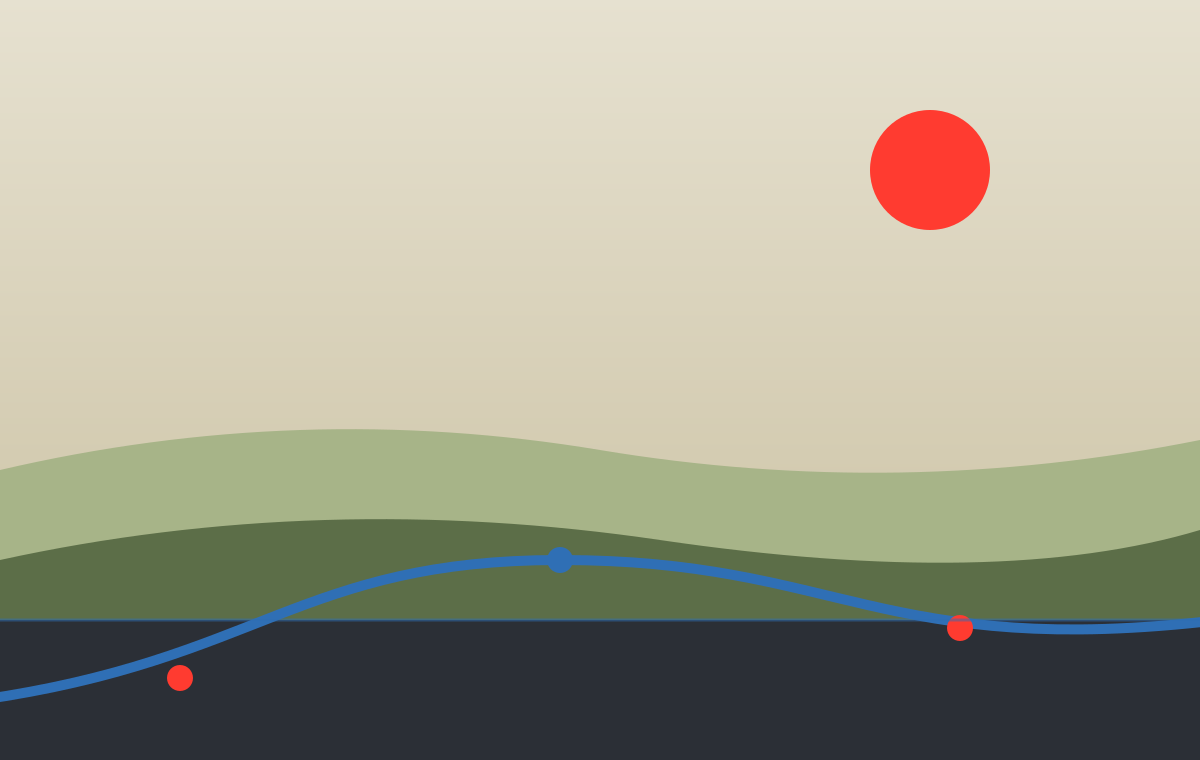
Plan a ride that finishes as well as it starts
Good planning is the difference between a great day out and a long walk home. Learn to read a route, sketch a weekend ride, pace your effort and pack for whatever the Australian sky decides to do.
Distance is only one of three numbers
Before you commit to a ride, read its distance, its elevation and its surface together. Any one of them in isolation will lie to you.
Illustrative profile — not a real route. The spike near three-quarters distance is the part that will define your day.
What each grade really means
A five-bar grade summarises sustained climbing and how relentless it feels — not just the total metres.
Flat · social pace
Rolling · some climbs
Big · sustained ascent
And the surface decides your tyres
- Sealed — fast and predictable; any bike is fine.
- Gravel — slower; wider tyres and lower pressure pay off.
- Mixed — plan for the worst section, not the average.
Sketch a weekend ride
Set the surface, your bike and a distance — we’ll rough out a time and effort estimate to start from. Indicative only; your pace and the conditions decide the real day.
—
Educational simulation — not navigation or fitness advice.
Pace the start so you can enjoy the finish
Most riders blow up not because a ride was too long, but because the first hour was too fast. Endurance is built by managing effort, fuel and water across the whole day — and by being honest about what your legs have done lately.
- Start easier than feels right — you should be able to hold a conversation.
- Eat before you’re hungry; small snacks every 45 minutes beat one big stop.
- Drink to a schedule in the heat, not just when thirst finally arrives.
- Build distance gradually — adding too much, too soon is how injuries start.
A simple effort plan · illustrative
A rough effort shape, not a training prescription. Save energy for the last climb, not the first.
The packing checklist
Scale it to the ride. A short urban loop needs the essentials; a remote rail trail needs the lot.
Essentials
- Approved helmet, correctly fitted
- Front white and rear red lights
- Phone, charged
Repair kit
- Spare tube and tyre levers
- Pump or inflator
- Multitool and patch kit
Hydration & fuel
- Enough water for the gaps between taps
- Snacks every 45 minutes
- Electrolytes for hot days
Weather layers
- Packable rain or wind shell
- Sunscreen, sunglasses, brim or cap
- Light gloves for early starts
ID & money
- Identification and a card
- A little cash for country towns
- Emergency contact noted
For longer days
- Basic first-aid items
- Charger for an e-bike or phone
- Offline map saved in advance
Plan around Australian conditions
The same route is a different ride in February than in July. Build the country’s quirks into the plan, not just the kilometres.
Read the safety guideHeat windows
Start at first light in summer; finish before the worst of the afternoon and check for fire bans.
Forecast & storms
Check the forecast the night before. Summer storms build fast — have an exit plan.
Long gaps between towns
In regional Australia, services are far apart. Carry extra water, food and a backup plan.
Tell someone
Share your route and return time, especially where phone coverage drops out.